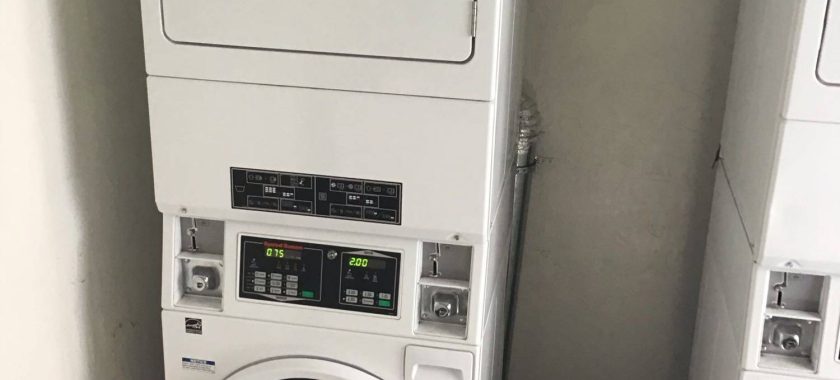
When a washing machine fails to soak clothes evenly, the issue usually shows up quickly: some items come out fully saturated while others remain partially dry or barely touched by detergent. This creates poor cleaning results and often leads to longer or repeated wash cycles. The cause is rarely a single failure. More often, it’s a combination of water flow, load behavior, and internal component performance.
Understanding how water is distributed inside the drum helps narrow down the problem.
Uneven loading and drum balance
One of the most common reasons is how the laundry is placed inside the machine. When heavy items like towels, jeans, or bedding cluster on one side, the drum loses balance. In this condition, the machine may reduce spin intensity or interrupt normal agitation patterns to protect internal components.
As a result, water doesn’t circulate evenly through the load. Some fabrics stay outside the main flow of movement, missing full exposure to detergent and rinse water. Even machines with automatic load sensing cannot always correct extreme imbalance.
Low water pressure or inlet restrictions
Water distribution depends on consistent pressure from the supply line. If household water pressure drops or if inlet hoses are partially blocked, the machine fills slowly or unevenly. In some cases, only one inlet valve (hot or cold) delivers properly, which changes how water mixes inside the drum.
Sediment buildup in inlet filters is another common factor. Small debris can restrict flow enough to reduce overall saturation without stopping the cycle entirely.
Faulty water inlet valve
The inlet valve controls how water enters the machine. When it begins to fail, it may not open fully or may open inconsistently. This leads to uneven filling during the wash phase.
A partially working valve often creates subtle symptoms: the cycle runs normally, but water distribution feels weak or inconsistent. Clothes on one side of the drum may remain drier than expected.
Drum rotation and mechanical movement issues
Even water distribution depends on proper drum movement. The machine must rotate in steady cycles to lift and drop clothes through water and detergent. If the drive belt is worn, motor performance is weak, or the control system mismanages agitation timing, water circulation becomes uneven.
In top-load machines, agitator wear can reduce water movement significantly. In front-load models, suspension issues may cause poor drum positioning, affecting how water spreads across fabrics.
Clogged filters and drainage imbalance
A partially clogged drain system can disrupt the balance between water intake and removal. If water is not cycling correctly, the machine may not maintain the right level during wash phases. This creates uneven soaking because the drum never reaches stable saturation conditions.
Pump strain or partial blockage also changes how water moves during agitation, especially in eco or quick wash modes where water levels are already reduced.
Sensor and control system errors
Modern washing machines rely on pressure sensors and electronic control boards to regulate water levels. When these sensors misread internal pressure, the machine may underfill the drum or stop adding water too early.
This leads to a situation where the cycle appears normal, but actual water distribution is insufficient for full fabric coverage.
Overloading or fabric type imbalance
Fabric composition matters. Large mixed loads—such as combining heavy towels with lightweight synthetics—create uneven absorption patterns. Heavier items block water flow to lighter ones, reducing overall efficiency.
Overloading intensifies this effect by limiting free movement inside the drum. Water cannot circulate properly, leaving dry pockets throughout the load.
Hard water buildup and detergent residue
Mineral deposits from hard water can accumulate inside the drum, spray arms, and internal channels. Over time, this reduces water flow efficiency and changes how evenly fabrics absorb moisture.
Excess detergent use can worsen the problem by creating residue that interferes with water penetration.
When professional inspection becomes necessary
If uneven soaking continues across different loads and settings, the issue is likely mechanical or electrical rather than user-related. Components such as inlet valves, pressure sensors, or circulation systems may require inspection or replacement.
At this stage, targeted diagnostics are more effective than repeated cycle adjustments.
For accurate troubleshooting and repair, professional support ensures the system is restored to proper water distribution performance.
Contact Chula Vista Appliance Repair Company to diagnose and resolve washing machine water flow and distribution issues before they develop into larger system failures.
Contact us
(619) 880-5508