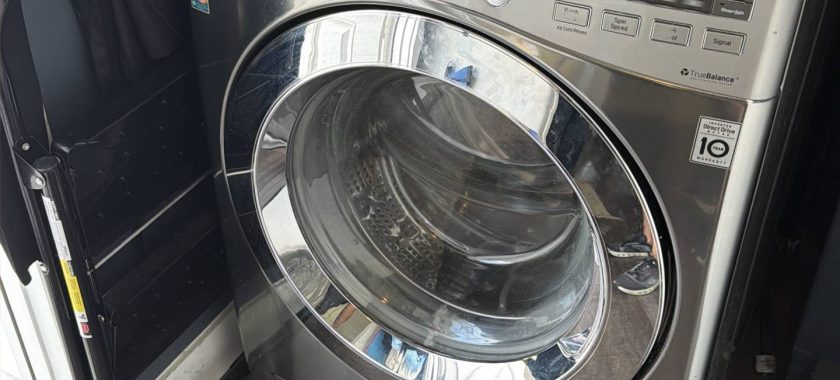
When a washing machine finishes its program but the drum is noticeably hot to the touch, it usually points to excessive mechanical resistance inside the system. Under normal conditions, the drum may feel slightly warm after a high-temperature wash or long spin cycle, but it should never retain strong heat once the cycle ends. Persistent overheating suggests that internal components are working under strain, converting energy into friction instead of smooth motion.
The two most common sources of this problem are motor-related resistance and worn drum bearings. Both issues develop gradually, which makes early symptoms easy to overlook.
How friction leads to heat buildup
A washing machine drum rotates through a system of belts, pulleys, and bearings, driven by an electric motor. When every part is in good condition, movement is smooth and energy loss is minimal. If resistance increases, the motor compensates by working harder. That extra load generates heat, which transfers into the drum assembly.
Unlike heating caused by hot water cycles, friction heat often remains localized around the drum shaft or rear panel. This is why the exterior drum can feel unusually warm even after a cold wash program.
Worn drum bearings
Bearings support the rotation of the drum and reduce direct metal-to-metal contact. Over time, they degrade due to moisture exposure, detergent residue, and continuous load stress.
When bearings begin to fail, several signs appear together:
- A low grinding or rumbling sound during spinning
- Slight drum wobble when turned by hand
- Increasing resistance when rotating manually
- Heat buildup after cycle completion
As friction increases, the motor must deliver more torque to maintain speed. That overload translates into excess heat, which can remain trapped inside the drum housing.
Ignoring bearing wear can lead to shaft damage, higher repair costs, and in some cases, complete drum seizure.
Motor strain and overheating
The drive motor can also be responsible for unusual heat retention. Electrical or mechanical stress forces it to operate beyond its optimal range.
Common causes include:
- Partial coil degradation inside the motor windings
- Worn carbon brushes (in brushed motors)
- Irregular voltage supply affecting performance
- Blocked or stiff drum movement increasing load
A stressed motor generates heat continuously during operation. If cooling cycles are insufficient or airflow around the motor is restricted, that heat transfers into surrounding components, including the drum.
A key indicator is a distinct burnt smell or intermittent performance drops during the cycle.
Drive belt and pulley resistance
In belt-driven machines, a slipping or overly tight belt can also contribute to friction. A worn belt may rub unevenly against pulleys, while a misaligned pulley system increases resistance on every rotation.
This type of issue often starts subtly. The machine still completes cycles, but the motor works harder than usual. Over time, that hidden strain produces heat accumulation that becomes noticeable after washing ends.
Why the machine still completes cycles
One of the most misleading aspects of this issue is that the appliance continues to function normally. Modern washing machines are designed with enough tolerance to finish a cycle even under moderate mechanical stress. Control boards compensate by adjusting motor output.
However, this compensation hides the underlying issue rather than solving it. The machine may appear stable while internal wear accelerates.
What can happen if the problem is ignored
Continued operation under friction stress leads to a predictable pattern of deterioration:
- Increasing noise levels during spin cycles
- Reduced washing efficiency due to inconsistent drum speed
- Higher energy consumption
- Progressive overheating of motor components
- Eventual breakdown of bearings or drive system
At advanced stages, repair becomes more complex because secondary parts such as the drum shaft or motor mount may also be affected.
Basic checks before calling a technician
Some simple observations can help narrow down the cause:
- Rotate the drum manually when the machine is off. It should move smoothly without resistance or grinding.
- Listen for changes in sound during spin cycles.
- Check for vibration patterns that were not present before.
- Observe whether heat appears after all programs or only intensive cycles.
If any combination of resistance, noise, and heat is present, internal servicing is usually required.
Professional diagnosis and repair
Identifying whether the issue comes from bearings, motor, or drive components requires partial disassembly and electrical testing. Technicians typically inspect:
- Drum bearings and seal integrity
- Motor current draw under load
- Belt tension and pulley alignment
- Shock absorbers and mounting stability
Replacing worn bearings or a failing motor early prevents damage from spreading to the drum structure or control electronics.
A washing machine that completes its cycle but leaves the drum unusually hot is signaling internal resistance that should not be ignored. The most common causes are bearing wear and motor strain, both of which worsen over time if left untreated. Early inspection keeps repairs simpler and reduces the risk of major component failure.
For accurate diagnosis and repair, contact Chula Vista Appliance Repair Company. Timely servicing restores stable operation and prevents unnecessary damage to the appliance.
Contact us
(619) 880-5508