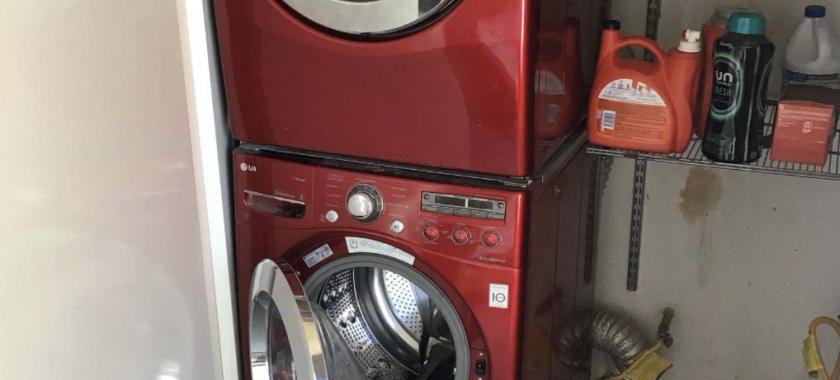
A Samsung washing machine that fills with water but fails to spin can leave clothes soaking wet at the end of the cycle. In many cases, the problem is connected to the drive system, particularly the motor or drive belt. However, several other components can prevent the drum from rotating, so proper diagnosis is necessary before replacing parts. When the drum does not spin, the washer may still turn on, accept cycle settings, fill with water, and even attempt to start the wash program. You may hear a humming sound, clicking, or the motor trying to operate, while the drum remains completely still. Understanding the possible causes can help you recognize when professional appliance repair is needed.
Check for an Overloaded Drum
Before assuming there is a mechanical failure, check the load inside the washer. An overloaded drum can make it difficult for the motor to rotate properly, especially during the spin cycle. Large items such as blankets, towels, and heavy clothing can also become unevenly distributed. Samsung washing machines are designed to detect certain load-balance problems and may reduce or stop the spin cycle to protect the appliance. If the washer works normally with a smaller, evenly distributed load, the issue may have been related to load balance rather than a failed component. If the drum remains stationary with different loads, further inspection is necessary.
A Damaged or Loose Drive Belt
Some Samsung washing machine models use a drive belt to transfer power from the motor to the drum. Over time, the belt can stretch, crack, fray, or break. A worn belt may slip when the motor attempts to turn the drum, resulting in weak or inconsistent rotation. A broken belt can produce a very specific symptom: the motor may run, but the drum does not move. You might hear the machine operating while there is little or no drum movement. A technician can inspect the belt for visible damage and check its tension and condition. If the belt is worn, replacing it can restore proper drum operation. Continuing to operate the washer with a damaged belt may place additional stress on other drive components.
Motor Problems Can Stop the Drum
The motor is responsible for providing the force needed to rotate the drum. If the motor develops an electrical or mechanical fault, the washer may fill and drain but fail to spin. Motor problems can have different symptoms. The washer may remain silent, produce a humming noise, attempt to start and stop repeatedly, or operate intermittently. A technician needs to determine whether the motor itself has failed or whether another component is preventing it from working correctly. On some Samsung models, the motor system uses electronic controls rather than a conventional belt-driven design. This makes model-specific diagnosis particularly important because the exact drive configuration varies between machines.
The Motor Control System May Be Involved
A washing machine motor depends on electronic controls to receive the correct commands and operate at the required speed. If the motor control system or related wiring develops a problem, the drum may stop spinning even when the motor itself is mechanically sound. Loose wiring, damaged connectors, electrical faults, or a malfunctioning control component can interrupt communication between the washer’s main control system and motor. Replacing a control board without confirming the actual failure can be expensive and may not solve the problem. Professional troubleshooting helps identify whether the fault is in the motor, wiring, control system, or another part of the drive assembly.
A Jammed Drum Can Prevent Spinning
A foreign object can sometimes become trapped between the drum and tub. Small items such as coins, wires, or other objects left in clothing can interfere with drum movement. If the drum is difficult to turn by hand when the washer is unplugged, there may be a mechanical obstruction or another internal problem. Do not force the drum because doing so could cause additional damage. A technician can safely inspect the drum and determine whether an obstruction, bearing issue, or other mechanical fault is responsible.
Worn Drum Bearings
Drum bearings support the rotating assembly and allow it to turn smoothly. When bearings become worn, the washer may produce grinding, rumbling, or knocking sounds. Severe bearing damage can create enough resistance to prevent normal spinning. Bearing replacement can be a more involved repair than replacing a drive belt, and the exact procedure depends on the Samsung washer model. Early diagnosis is useful because continued operation with severely damaged bearings may cause additional component damage.
Why Professional Diagnosis Matters
Several different failures can produce similar symptoms. A washer that will not spin could have a broken belt, motor problem, electronic control issue, obstruction, worn bearing, wiring fault, or load-balance problem. Before ordering a replacement part, the washer should be tested systematically. A professional technician can inspect the drive system, evaluate motor operation, check electrical connections, and determine which component is actually causing the problem. If your Samsung washing machine fills with water but the drum does not spin, avoid repeatedly restarting the cycle. Unplug the appliance if you notice unusual burning smells, loud mechanical noises, or electrical symptoms. For dependable diagnosis and repair, contact Chula Vista Appliance Repair Company. A qualified appliance technician can identify the cause of the spinning problem and recommend the appropriate repair for your Samsung washing machine. Contact Chula Vista Appliance Repair Company to schedule professional washing machine service and get your washer back to proper operation.
Contact us
(619) 880-5508