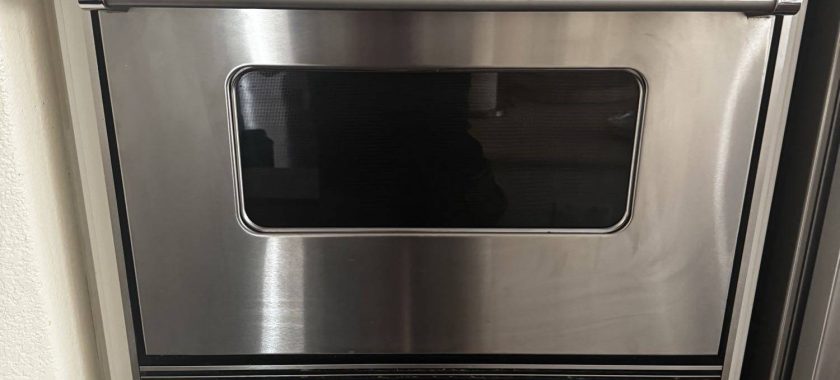
A convection oven is designed to circulate hot air evenly around the cooking chamber. In a GE oven, this job is usually handled by a convection fan mounted at the rear of the oven cavity. When the fan is working properly, you may hear a steady, relatively quiet airflow during convection cooking. If the oven fan suddenly becomes loud, rattles, scrapes, hums, or produces an unusual grinding sound, there may be a problem with the fan assembly.
A noisy oven fan should not be ignored. The sound can indicate anything from a loose fan blade to a worn convection motor. Continuing to operate the oven without identifying the source may lead to additional damage and can affect cooking performance.
What Does a Normal GE Oven Fan Sound Like?
Convection fans naturally produce some noise while operating. You may hear the movement of air or a consistent low-level hum. The sound should generally remain stable throughout the cooking cycle.
A problem becomes more likely when the fan starts making a new or unusually loud sound. Common examples include rattling, buzzing, grinding, scraping, squealing, or intermittent clicking. The type of noise can provide clues about what is happening inside the oven, although a proper inspection is needed to identify the exact cause.
Possible Cause: Damaged or Loose Fan Blade
The convection fan blade is responsible for moving air throughout the oven. If the blade becomes bent, cracked, loose, or damaged, it may no longer rotate evenly.
A damaged blade can come into contact with the surrounding housing or other components, creating a scraping or rattling noise. Even a small deformation can cause noticeable vibration when the fan spins at high speed.
Food residue or other debris can also interfere with the fan assembly. If something becomes lodged around the blade, the fan may become unbalanced or produce an unusual sound.
The blade should be inspected for visible damage and checked for proper alignment. Because the oven contains electrical and heating components, inspection and repair should be performed with the appliance safely disconnected from power.
Possible Cause: Worn Convection Fan Motor
The convection motor rotates the fan blade. Like other mechanical components, the motor can wear over time.
A worn motor may produce a humming, buzzing, grinding, or squealing sound. In some cases, the fan may start normally and become louder as the oven heats up. In other situations, the motor may struggle to turn the blade or stop intermittently.
Motor bearings can deteriorate with use, creating additional friction and noise. If the motor is failing, replacing the fan blade alone will not solve the underlying problem.
A technician can check whether the motor is receiving the correct electrical supply and determine whether the motor itself is responsible for the noise.
Uneven Air Circulation Can Affect Cooking
A failing convection fan does more than create an annoying sound. It can also affect how the oven cooks.
The purpose of convection is to circulate heated air around the food. If the fan does not rotate correctly, air distribution can become uneven. You may notice that food takes longer to cook, browns inconsistently, or requires different rack positions than usual.
If the fan is struggling to operate, the oven may also take longer to reach or maintain the expected cooking conditions.
Why the Noise Should Be Checked
It can be tempting to continue using an oven when it is still heating normally. However, a loud fan can be an early indication of mechanical failure.
If a damaged blade becomes loose, it may cause additional damage as it continues to rotate. A motor that is operating under excessive strain may eventually stop working altogether.
Identifying the problem early can help prevent a relatively straightforward repair from developing into a larger appliance problem.
What a Technician May Inspect
During a service visit, a technician may examine the convection fan blade, motor, mounting points, wiring, and surrounding components. The technician can also check whether the fan rotates freely and whether there are signs of physical damage or excessive wear.
If the blade is damaged, replacement may be necessary. If the motor has worn bearings or another internal fault, replacing the motor assembly may be the appropriate repair.
The exact repair depends on the GE oven model and the component that has failed. Using the correct replacement part is important because convection fan assemblies can vary between models.
When to Stop Using the Oven
If the fan is producing a severe grinding or scraping noise, the blade appears loose, there is a burning smell, the oven is overheating, or the fan is behaving unpredictably, it is safer to stop using the appliance until it has been inspected.
Do not attempt to reach into the oven or remove internal components while the appliance is connected to power. Oven repairs can involve electrical connections and high-temperature components that require proper safety precautions.
Call Chula Vista Appliance Repair Company
A GE oven fan that suddenly becomes loud may have a damaged fan blade, worn convection motor, loose component, or another mechanical issue. Proper diagnosis can identify the source of the noise and determine which part needs attention.
If your GE oven is making unusual fan noises, contact Chula Vista Appliance Repair Company to schedule professional appliance repair service. A technician can inspect the convection system, identify the faulty component, and recommend the appropriate repair.
Call Chula Vista Appliance Repair Company today to schedule service for your GE oven and get the fan problem checked before it leads to a larger failure.
Contact us
(619) 880-5508