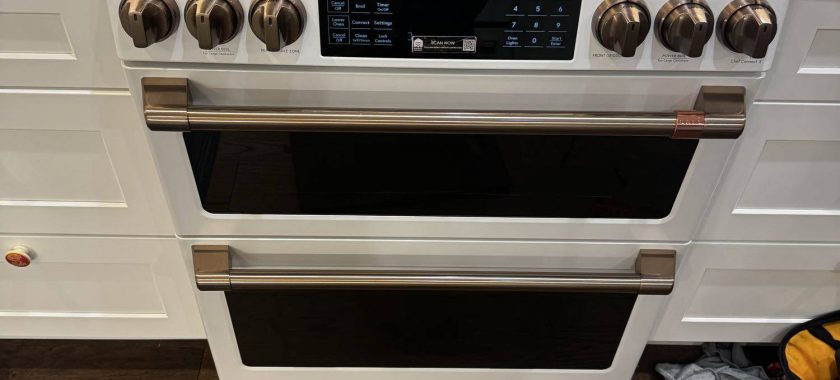
A gas range burner knob should turn smoothly and provide clear control over the flame. If a Whirlpool gas range knob suddenly feels loose, spins without changing the flame, becomes difficult to turn, or does not return properly to the OFF position, the problem should be investigated before the range is used normally.
The knob itself may be damaged, but the issue can also involve the burner control valve behind it. Because the valve regulates the flow of gas to the burner, a mechanical problem in this component can affect both burner operation and safety.
Why a Whirlpool Gas Range Knob Becomes Loose
One of the simplest causes is a damaged or worn knob. Range knobs are handled frequently, and the plastic shaft or internal fitting can eventually crack or wear down. When this happens, the knob may no longer grip the valve stem correctly.
A loose knob can also result from an impact. If the knob has been pulled at an angle, dropped, or struck while cleaning the control panel, its internal connection may become damaged. In this situation, the knob may feel unusually loose even though the control valve itself is still functioning correctly.
Replacing a damaged knob is usually straightforward. However, if the new knob does not solve the problem, the valve and valve stem should be inspected.
When the Control Valve May Be the Problem
The burner control valve sits behind the knob and controls how much gas reaches the burner. Turning the knob changes the valve position, allowing the burner flame to increase, decrease, or shut off.
If the valve becomes worn or mechanically damaged, the knob may become difficult to turn. You may notice that the knob requires significantly more force than the other burners or feels rough during rotation.
A damaged valve can also cause the knob to feel unusually loose or fail to respond normally. In some cases, the knob turns but the flame does not change as expected. This indicates that the connection between the knob and valve may not be working properly.
Because the control valve is part of the gas system, it should not be treated like an ordinary loose appliance component. Attempting to force the knob can damage the valve further.
Signs You Should Stop Using the Burner
Certain symptoms require particular attention. Stop using the affected burner if the knob is extremely difficult to turn, does not reliably shut the flame off, or continues to allow gas flow when the burner should be OFF.
A gas odor around the range is another serious warning sign. If you smell gas, do not operate electrical switches, use an open flame, or attempt to diagnose the appliance yourself. Leave the area and follow appropriate gas-safety procedures.
A knob that is simply cracked or worn may not create an immediate gas leak, but continued use can make operation unpredictable. If the knob slips while adjusting the flame, you may have difficulty controlling the burner accurately.
Why Forcing a Stiff Knob Can Make the Problem Worse
When a knob becomes difficult to turn, it can be tempting to use extra force. This is not a good solution.
The knob is connected to the control valve stem, and excessive pressure can damage the knob, stem, or valve mechanism. A broken plastic knob can be inexpensive to replace, while damage to the valve can require a more involved repair.
A stiff knob may also indicate an internal mechanical problem that will not disappear with continued use. Having the appliance inspected can identify whether the problem is limited to the knob or involves the valve underneath.
Other Problems That Can Look Like a Knob Failure
Not every burner-control problem originates with the knob or valve. A burner that does not respond correctly may have another issue affecting ignition or flame performance.
For example, food residue or grease around the burner can interfere with proper flame distribution. A burner cap that is not positioned correctly can also create uneven flames. However, these problems generally do not explain a knob that physically feels loose or difficult to rotate.
If the knob operates normally but the burner behaves incorrectly, the technician may need to inspect the burner assembly, igniter, gas supply components, or other related parts.
How a Technician Diagnoses the Problem
A professional appliance technician can inspect the knob, valve stem, and control valve to determine where the failure occurs. The technician may check whether the knob fits securely, whether the valve rotates correctly, and whether the burner responds properly to adjustments.
If the knob is damaged, replacing it may restore normal operation. If the control valve is worn or damaged, the appropriate repair may involve replacing the valve rather than continuing to use the faulty control.
The exact repair depends on the symptoms and the condition of the components. Using the correct Whirlpool replacement part is also important because control components can vary between models.
Keep Your Whirlpool Gas Range Safe and Functional
A loose or stiff burner knob should not be ignored, particularly when the burner does not respond consistently or the knob does not reliably return to OFF. What appears to be a small control problem can sometimes indicate wear or damage inside the gas control system.
If your Whirlpool gas range has a loose or difficult-to-turn burner knob, contact Chula Vista Appliance Repair Company for professional appliance service. A technician can inspect the control and determine whether the knob, control valve, or another component needs repair or replacement.
Call Chula Vista Appliance Repair Company to schedule service for your Whirlpool gas range.
Contact us
(619) 880-5508