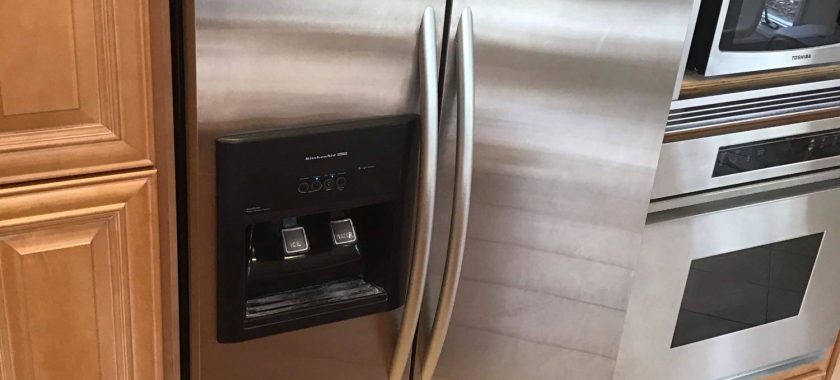
A Jenn-Air refrigerator water dispenser should provide a steady flow of water when the dispenser lever is pressed. If the water comes out slowly, sputters, or takes much longer than usual to fill a glass, the problem may be related to restricted water flow inside the refrigerator. A clogged water filter and a partially blocked inlet valve are two common causes, but other components can also affect dispenser pressure.
One of the first things to check is the water filter. Refrigerator filters remove impurities from the incoming water, but they gradually collect sediment and other particles. As the filter becomes saturated, water may have more difficulty passing through it. A noticeably weaker dispenser stream can be an early indication that the filter needs replacement.
If the filter has not been replaced according to the manufacturer’s recommended schedule, installing a compatible replacement may restore normal water flow. It is also important to make sure the filter is installed correctly. A filter that is not fully seated can restrict the water path or prevent the filter housing from sealing properly.
Sometimes the filter itself is not the primary problem. Sediment can accumulate in the filter housing or surrounding water passages and reduce the amount of water reaching the dispenser. If a new filter does not improve the flow, further inspection may be necessary.
The refrigerator’s water inlet valve is another component that can cause low dispenser pressure. This valve controls the flow of water entering the refrigerator from the household supply. When the valve becomes clogged with sediment or mineral deposits, it may not open fully. The result can be a weak stream even when the home’s water pressure is normal.
A failing inlet valve can also produce inconsistent water flow. The dispenser may work normally for a short period and then become weaker. In some cases, the refrigerator may make a humming or buzzing sound when the dispenser is activated because the valve is receiving power but cannot provide sufficient water flow.
The household water supply should also be considered. A partially closed shutoff valve behind the refrigerator can restrict the amount of water entering the appliance. A kinked or compressed supply line can create a similar problem. This is particularly common after a refrigerator has been moved for cleaning or maintenance.
Before assuming that the dispenser itself has failed, check whether the refrigerator’s ice maker is also experiencing reduced water flow. If both the ice maker and dispenser are filling slowly, the problem may be farther upstream, such as the supply line, shutoff valve, filter, or inlet valve. If the ice maker works normally while only the dispenser has low pressure, the restriction may be located in the dispenser’s water circuit.
Frozen water lines can also cause weak or intermittent dispensing. If part of the internal water line freezes, only a small amount of water may pass through. Temperature problems inside the refrigerator can contribute to this situation. A service technician can determine whether the line is frozen and identify why the restriction occurred.
The dispenser mechanism itself should not be overlooked. A damaged dispenser switch, restricted nozzle, or problem with the tubing can reduce or interrupt water flow. Mineral deposits may accumulate around the dispenser outlet, particularly in areas with hard water. Cleaning the external nozzle may help when the restriction is limited to the outlet, but internal blockages require a more detailed inspection.
Low dispenser pressure should not automatically be treated as a sign that the refrigerator needs a major repair. In many cases, the cause is relatively simple, such as an overdue filter replacement, restricted supply line, or partially closed water valve. However, repeatedly replacing filters without identifying the actual cause can waste money and delay the correct repair.
A technician can test the refrigerator’s water supply, inspect the filter system, check the inlet valve, examine the tubing, and determine whether the dispenser is receiving adequate water pressure. Electrical testing may also be necessary if the inlet valve or dispenser control is suspected of malfunctioning.
It is useful to address a low-pressure dispenser before the problem becomes a complete loss of water flow. A restricted water supply can affect other refrigerator functions and may indicate a component that is deteriorating or becoming blocked. Prompt diagnosis can help prevent unnecessary parts replacement and restore reliable operation.
If your Jenn-Air refrigerator water dispenser has low pressure, the team at Chula Vista Appliance Repair Company can inspect the appliance and identify the source of the restricted water flow. Whether the issue involves the water filter, inlet valve, supply line, tubing, or dispenser assembly, professional diagnosis can help determine the appropriate repair.
Contact Chula Vista Appliance Repair Company at (619) 880-5508 to schedule Jenn-Air refrigerator repair service.