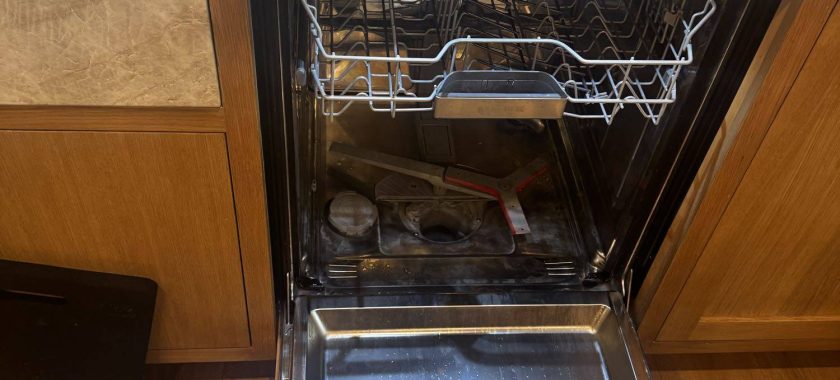
A KitchenAid dishwasher can complete a cycle while leaving the detergent sitting inside the dispenser. When the dispenser door does not open at the correct point in the wash cycle, dishes may come out dirty, greasy, or covered with food residue. The problem can be caused by a mechanical issue inside the dispenser, an electrical problem, or a failure in the dishwasher’s control system.
Understanding the possible causes can help you determine whether the issue needs professional attention.
How the Detergent Dispenser Works
The detergent dispenser is designed to remain closed during the initial part of the dishwasher cycle. At a specific point, the dishwasher activates the dispenser mechanism, allowing the door to open and release detergent into the tub.
Depending on the KitchenAid model, the dispenser may use a spring-loaded mechanism, latch, wax motor, solenoid, or another electrically controlled component. The control board sends the appropriate signal when it is time for the detergent to be released.
If any part of this process fails, the dispenser may remain closed throughout the cycle.
Possible Dispenser Mechanism Failure
One of the most common causes is a mechanical problem with the dispenser itself. The latch may become damaged, the spring may weaken, or the moving components may become stuck.
Detergent residue can also accumulate around the dispenser door. Over time, hardened detergent can interfere with the latch and prevent the door from opening properly.
A technician can inspect the dispenser for broken or worn components and check whether the door moves correctly. If the mechanism is damaged, replacing the dispenser assembly may be necessary.
Detergent Buildup Around the Door
Before assuming there is an electrical failure, inspect the dispenser for visible buildup. Powdered detergent can harden when exposed to moisture, while detergent pods can sometimes leave residue behind.
If residue prevents the dispenser door from moving freely, cleaning the area may resolve the problem. However, if the door remains stuck after cleaning, forcing it open is not recommended. A damaged latch or internal mechanism may require replacement.
Control Board Problems
The dishwasher’s electronic control board coordinates many functions, including when the detergent dispenser should open.
If the control board does not send the correct signal, the dispenser may remain closed even though its mechanical components are in good condition.
A control board problem can sometimes occur alongside other unusual dishwasher behavior, such as cycles stopping unexpectedly, buttons not responding correctly, or certain functions failing intermittently.
Diagnosing a control board requires more than simply replacing it. A technician should first determine whether the board is actually failing and whether the dispenser is receiving the required electrical signal.
Wiring or Electrical Connection Issues
The dispenser needs a reliable electrical connection when its mechanism is electronically activated. Damaged wiring, loose connections, corrosion, or a failed connector can interrupt the signal.
This type of problem may be difficult to identify without testing because the wiring is located inside the dishwasher and door assembly.
A professional technician can inspect the wiring and use appropriate electrical tests to determine whether the dispenser is receiving power during the relevant part of the cycle.
Why the Dishwasher May Still Run Normally
A dispenser problem does not necessarily prevent the dishwasher from starting or completing a cycle. The appliance may fill with water, wash, drain, and dry while the detergent remains trapped in the dispenser.
This can make the issue easy to overlook. You may notice the problem only when dishes repeatedly come out with grease, food particles, or cloudy residue.
If the dispenser is not releasing detergent, running additional cycles may not solve the underlying problem. It can also lead to unnecessary water and electricity use.
What You Can Check
Start by making sure the dispenser door is not blocked by a large dish, utensil, or other item. Dishwasher racks should be loaded so that nothing interferes with the dispenser.
Next, check for visible detergent residue around the door and latch. Clean accessible residue carefully and make sure the door can move freely.
If you use detergent pods, make sure they are placed correctly according to your KitchenAid model’s instructions. Do not place detergent directly into the dispenser if the dispenser door is visibly damaged or stuck.
If the dispenser continues to stay closed, professional diagnosis is the safest next step.
When Professional Repair Is Needed
If cleaning and checking for obstructions do not solve the problem, the dispenser mechanism, wiring, or control board may need to be tested.
A technician can inspect the dispenser assembly, check its electrical connections, test the relevant components, and determine whether the control board is sending the correct signal.
Replacing parts without proper diagnosis can be expensive and may not solve the problem. For example, replacing a dispenser when the actual issue is a wiring connection would leave the original problem unresolved.
Do Not Ignore Repeatedly Dirty Dishes
A dishwasher that consistently leaves detergent inside the dispenser is giving you a useful warning that something is not working correctly. The longer the problem continues, the more often you may need to rerun cycles or wash dishes manually.
If your KitchenAid dishwasher detergent dispenser won’t open, contact Chula Vista Appliance Repair Company for professional appliance service.
Call Chula Vista Appliance Repair Company at (619) 880-5508 to schedule an inspection and get your KitchenAid dishwasher working properly again.