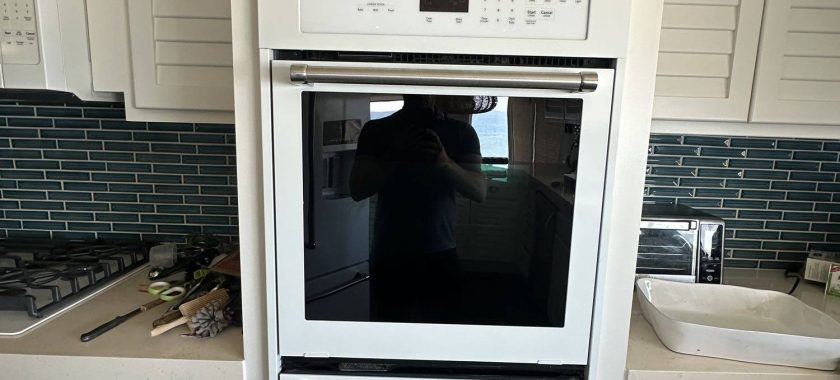
When an oven starts baking at the expected temperature but gradually shifts during longer cooking cycles, the issue often becomes visible only in results: uneven browning, collapsed dough, dry edges, or undercooked centers. Short preheats may look normal, but extended heat exposure reveals instability in the temperature regulation system. This pattern usually points to faults in temperature sensing, control electronics, or heat cycling behavior inside the appliance.
Understanding how an oven maintains heat helps narrow the problem. Most modern ovens rely on a sensor (thermistor or RTD probe) that measures internal temperature and sends data to a control board. The board then switches heating elements on and off to maintain the set level. Any disruption in this loop leads to gradual drift instead of steady regulation.
Temperature sensor wear and inaccurate readings
A common cause is sensor degradation. The probe inside the oven is constantly exposed to high heat cycles. Over time, its resistance values can shift, especially after repeated long baking sessions at high temperatures.
When the sensor begins to misread, the control system receives incorrect feedback. The oven may think it has reached the target temperature and reduce heating too early, or continue heating beyond the set point without stabilizing correctly. This results in slow but noticeable drift during longer cooking cycles.
Even minor deviations in sensor accuracy can affect recipes that depend on consistent thermal conditions, such as bread, pastries, and roasted meats.
Control board instability and relay wear
The electronic control board acts as the decision center of the oven. It processes sensor input and manages power distribution to heating elements through relays or solid-state switches. When the board develops faults, temperature regulation becomes inconsistent under sustained load.
Heat exposure is a key factor. Control boards are often located near warm zones inside the appliance. Repeated thermal expansion can weaken solder joints or degrade relays. A relay that sticks or switches irregularly can cause heating elements to cycle at the wrong intervals, leading to gradual temperature drift rather than sudden failure.
In some cases, the board may also suffer from voltage instability. Fluctuations in power supply can interfere with its ability to maintain consistent heating cycles, especially during long baking programs.
Heating element fatigue and uneven cycling
While sensors and control boards are often the focus, heating elements themselves can contribute to instability. Over time, elements may develop weak spots that cause uneven heat distribution. Instead of delivering consistent output, they may heat in pulses or lose efficiency as they warm up.
During long baking sessions, this imbalance becomes more visible. The oven compensates by increasing cycle frequency, but if the feedback loop is already compromised, compensation is incomplete. The result is slow temperature drift that becomes more pronounced as cooking time increases.
Door seal and heat retention issues
A less obvious factor is heat leakage. If the door gasket is worn or compressed, the oven loses heat gradually during operation. At first, the system compensates by cycling more frequently, but over time the control logic may struggle to maintain stability.
This issue is often mistaken for sensor failure because both produce similar symptoms: fluctuating internal temperature and inconsistent baking results over extended periods.
Electrical supply fluctuations
Ovens require stable voltage to maintain predictable heating cycles. In older buildings or overloaded circuits, voltage drops can affect heating performance. During long baking sessions, these small fluctuations accumulate, leading to visible temperature inconsistency.
Although the oven may still reach target temperature during preheat, maintaining it becomes difficult when power delivery is inconsistent.
Why the issue appears only during long baking
Short cooking cycles often mask these problems. The oven reaches the set temperature quickly and does not remain in a regulated state long enough for drift to become noticeable. Long baking sessions, however, force the system to maintain equilibrium for extended periods. This is when sensor inaccuracies, relay fatigue, and heat loss accumulate and become visible in the final result.
Professional diagnosis and repair
Identifying the exact cause requires testing beyond surface-level symptoms. Technicians typically measure sensor resistance at different temperatures, inspect relay behavior on the control board, and evaluate heating element output under load. In some cases, firmware resets or recalibration can resolve the issue, but hardware replacement is often necessary when components have degraded.
Ignoring the problem may lead to worsening performance and higher energy consumption, as the oven compensates for inaccurate feedback loops by running longer cycles than required.
For reliable diagnosis and repair of temperature regulation issues, it is recommended to contact a qualified service provider.
For professional assistance and accurate troubleshooting, order service from Chula Vista Appliance Repair Company.
Contact us
(619) 880-5508