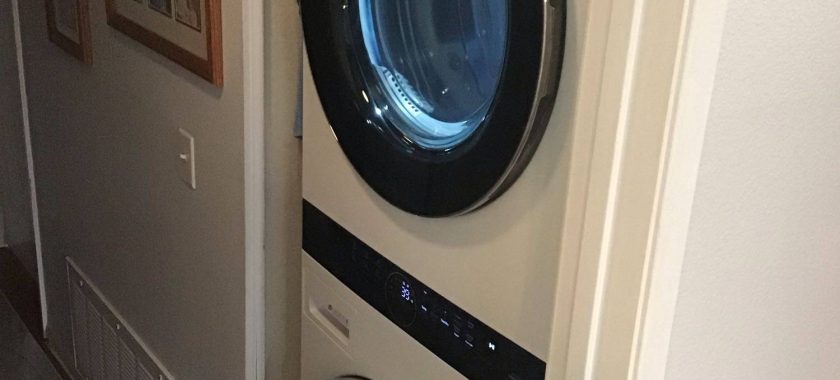
It is one of the most frustrating sounds in a household: the rhythmic thumping of a washing machine tub hitting the side of the cabinet, followed by the sudden silence of an error code. You rush to the laundry room only to find that the machine has stopped mid-cycle, leaving a single bath mat or a lone pair of jeans soaking wet. It seems counterintuitive—if the machine can handle a king-sized duvet, why does it struggle with a single item?
The answer lies in the sophisticated Load Balance Detection systems built into modern high-efficiency (HE) and front-loading machines. While these systems are designed to protect your appliance, they are notoriously sensitive to “under-loading.”
Understanding the Physics of the Spin Cycle
To understand why light loads cause errors, we must look at centrifugal force. During a high-speed spin, the washing machine drum rotates at speeds often exceeding 1,000 RPM. For a smooth spin, the weight of the laundry must be distributed evenly across the inner circumference of the drum.
When a drum is appropriately full, the items naturally spread out and “plaster” themselves against the walls, creating a balanced ring of weight. However, when you wash a single heavy item—like a heavy hoodie or a thick towel—there is no counterweight on the opposite side of the drum. As the machine attempts to ramp up the speed, that single heavy mass creates a significant centrifugal “tug” in one direction. This creates a “wobble” that can damage the internal bearings, the motor, and the suspension springs.
How Your Machine Detects an Issue
Modern appliances use several methods to detect these balance errors before mechanical failure occurs:
- Tachometer Sensors: These monitor the speed of the motor. If the weight is uneven, the motor has to work harder on the “up-swing” of the rotation and moves faster on the “down-swing.” The sensor detects these micro-fluctuations in speed and halts the cycle.
- Electronic Accelerometers: Similar to the technology in your smartphone, some machines have sensors that measure the actual physical vibration of the tub. If the displacement exceeds a certain millimeter threshold, the machine triggers an “unbalanced load” error (often displayed as UE or Ub).
- Pressure and Friction Checks: Some advanced models measure the electrical current drawn by the motor. An uneven load creates “spikes” in power consumption that the control board interprets as a hazard.
Why Small Loads are the Main Culprit
It is a common myth that “less is safer.” In reality, a machine that is too empty is just as prone to vibration as one that is overstuffed. When only two or three items are in the drum, they tend to clump together during the drain cycle. As the spin begins, they form a single “ball” of wet fabric. Without other clothes to fill the gaps around the rest of the drum, the machine is physically incapable of balancing itself.
Furthermore, certain materials hold more water than others. A single polyester shirt might spin fine, but a single cotton towel can triple its weight when saturated, making it a “heavy hitter” against the drum walls.
Troubleshooting and Prevention
If your machine is constantly stopping with light loads, there are several steps you can take to rectify the issue without calling for help immediately:
- The “Rule of Two”: Never wash a single heavy item alone. If you must wash a heavy jacket or a rug, add two or three smaller towels to the load. These act as “balancing weights” that the machine can spread around to counteract the heavy item.
- Check the Level: If your machine is not perfectly level on the floor, even a slightly uneven load will cause a massive vibration. Use a spirit level to ensure all four feet are making firm contact with the ground.
- Manual Rearrangement: When the error occurs, open the door and manually spread the wet clothes around the drum. Avoid simply hitting “Start” again without moving the clothes, as the machine will likely encounter the same physical hurdle.
When Is It a Mechanical Failure?
While light loads are often a user-error issue, consistent balance errors can sometimes point to deeper mechanical problems. If your machine vibrates violently even with perfectly distributed, medium-sized loads, you may be looking at:
- Worn Shock Absorbers: Like a car, your washer has shocks that dampen movement. Over time, these lose their resistance.
- Snapped Suspension Springs: These hold the tub in place. If one breaks, the tub will sag and hit the frame.
- Damaged Flange (Spider Arm): In front-loaders, the bracket that holds the drum can crack, causing the drum to spin “off-axis.”
If you have tried balancing your loads and checked the leveling of your machine but the thumping and error codes persist, it is time to bring in the experts.
Professional Solutions in Chula Vista
Don’t let a faulty balance sensor or worn-out suspension ruin your laundry day or damage your flooring. If your appliance is acting up, contact Chula Vista Appliance Repair Company. Our certified technicians specialize in diagnosing complex vibration issues and motor errors in all major brands. We provide fast, reliable service to get your household back in rhythm. Call us today to schedule your diagnostic appointment.
Contact us
(619) 880-5508